Buy hundeversicherungvergleich.eu ?
We are moving the project
hundeversicherungvergleich.eu .
Are you interested in purchasing the domain
hundeversicherungvergleich.eu ?
domain@kv-gmbh.de · 0541-91531010
Buy hundeversicherungvergleich.eu ?
How do you solve compound quantifiers?
Compound quantifiers can be solved by breaking them down into simpler quantifiers and then applying the appropriate rules. For example, if the compound quantifier is "for every x, there exists a y such that...", you can first consider the "for every x" part and then the "there exists a y" part separately. This allows you to apply the rules for universal and existential quantifiers to solve the compound quantifier step by step. By breaking down the compound quantifier into simpler parts and applying the rules systematically, you can effectively solve compound quantifiers. **
How do universal and existential quantifiers describe and negate statements?
Universal quantifiers, denoted by the symbol ∀, are used to make a statement about all elements in a set. For example, the statement "∀x P(x)" means that the predicate P(x) is true for all elements x in the set. To negate a universally quantified statement, we use the symbol ¬ before the quantifier, so the negation of "∀x P(x)" would be "¬∀x P(x)", which is equivalent to "∃x ¬P(x)". On the other hand, existential quantifiers, denoted by the symbol ∃, are used to make a statement about at least one element in a set. For example, the statement "∃x P(x)" means that there exists at least one element x in the set for which the predicate P(x) is true. To negate an existentially quantified statement, we use the symbol ¬ before the quantifier, so the negation of "∃x **
Similar search terms for Quantifiers
Top-Angebote
Products related to Quantifiers:
-
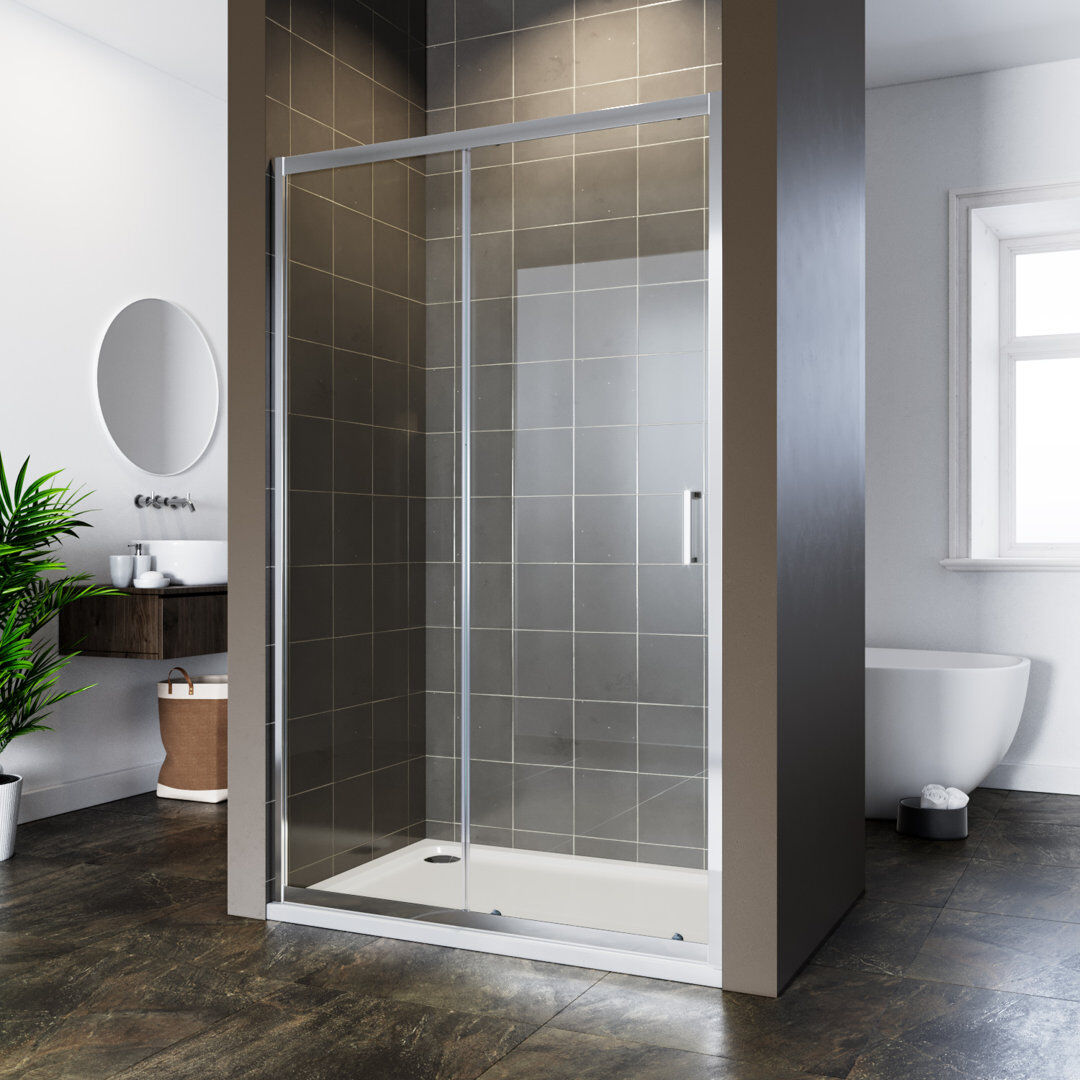
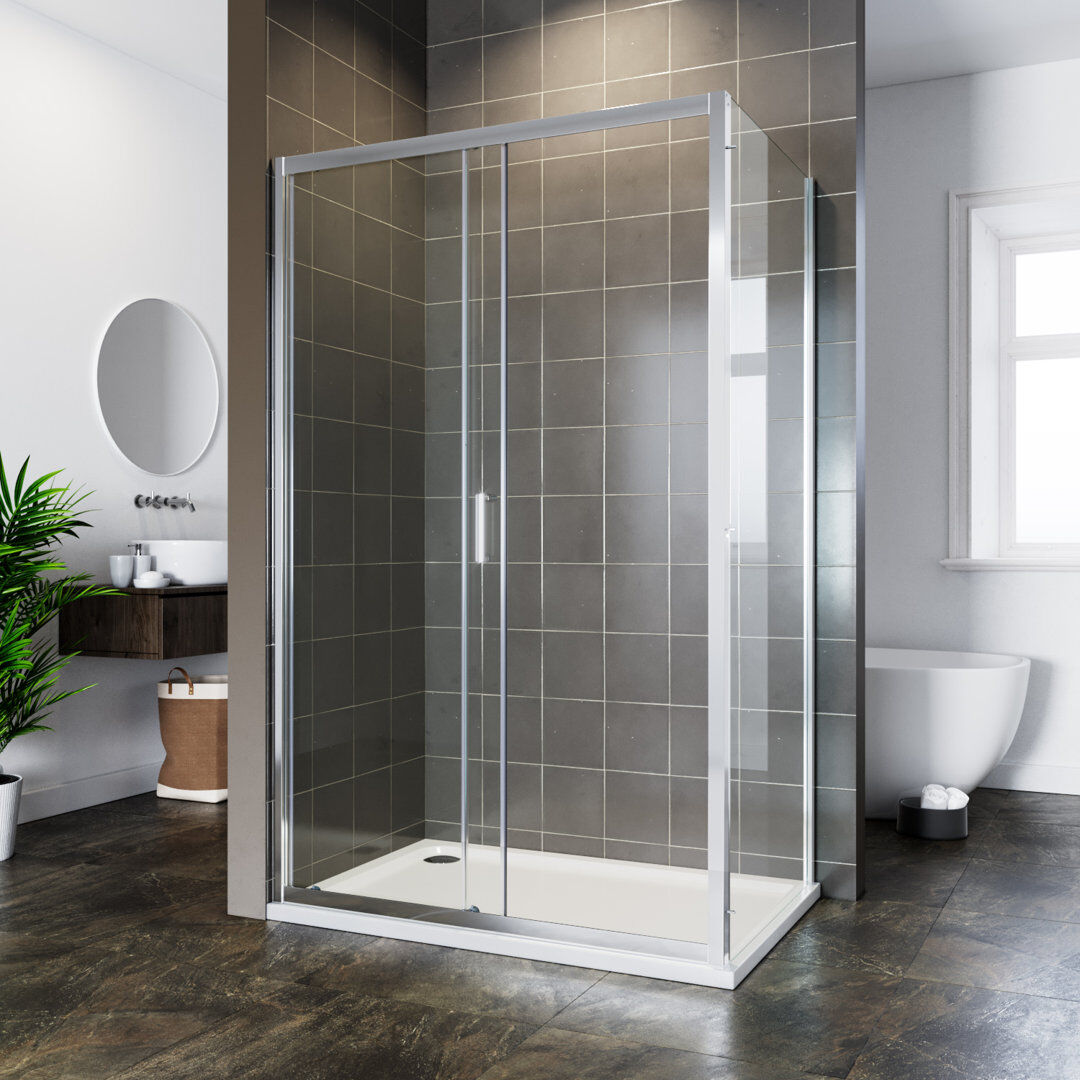
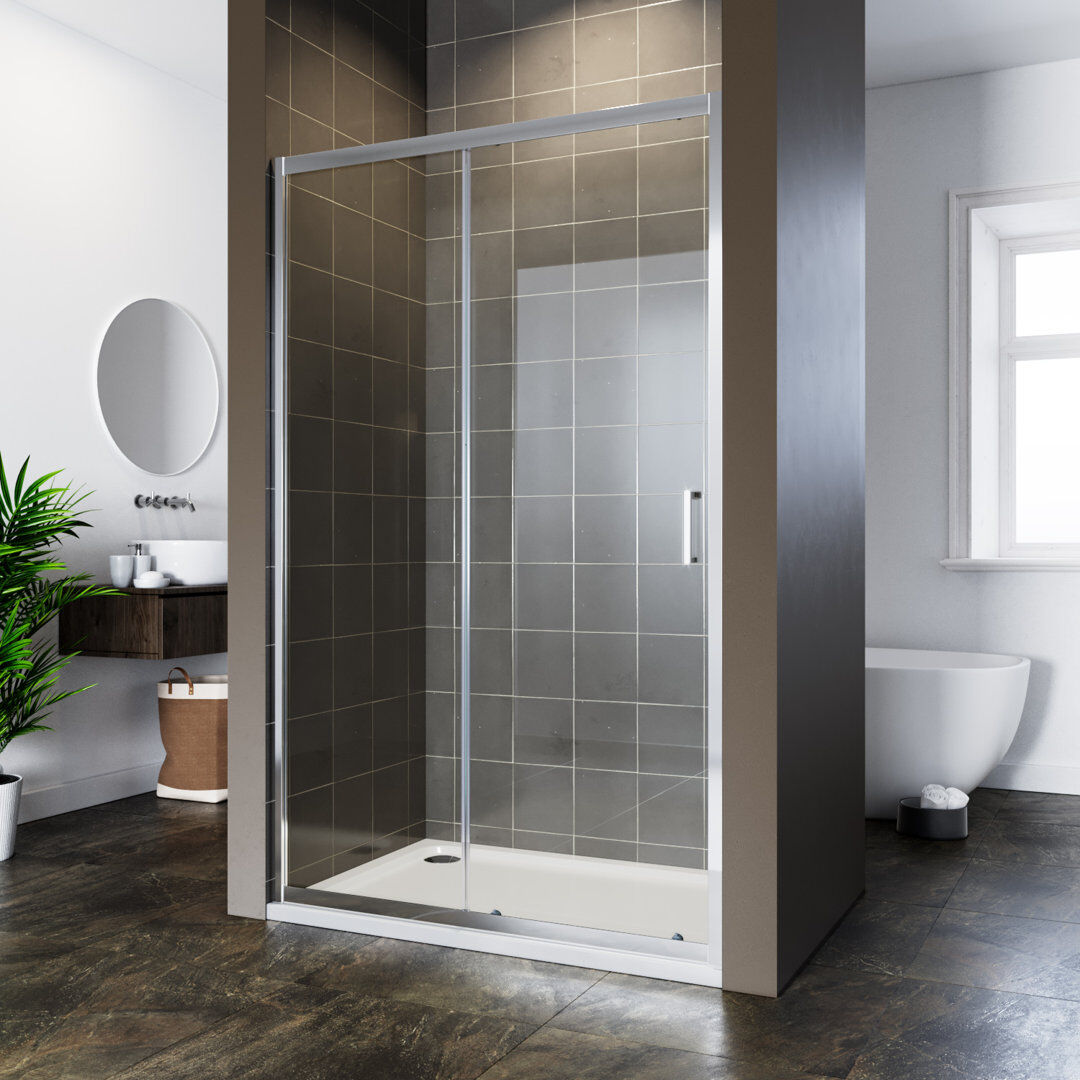
17 Stories Cost-effective single sliding door shower room, Silver Silver 120"The SLC Series shower enclosures redefine modern bathroom aesthetics with their minimalist single-slide design. Crafted from a premium silver-white aluminium frame and 5mm tempered glass, this series seamlessly blends durability with sophistication. Engineered for seamless integration into contemporary spaces, the enclosure features British Standard BS EN 12150-compliant silk-screened glass and precision-tuned sliding mechanisms. Ideal for compact layouts, its adjustable design ensures a perfect fit while maintaining a sleek, uncluttered appearance. 17 Stories Size Width: 120", Finish: Silver172,99 £*Shipping: 0,00 £Secure redirect to the provider
-
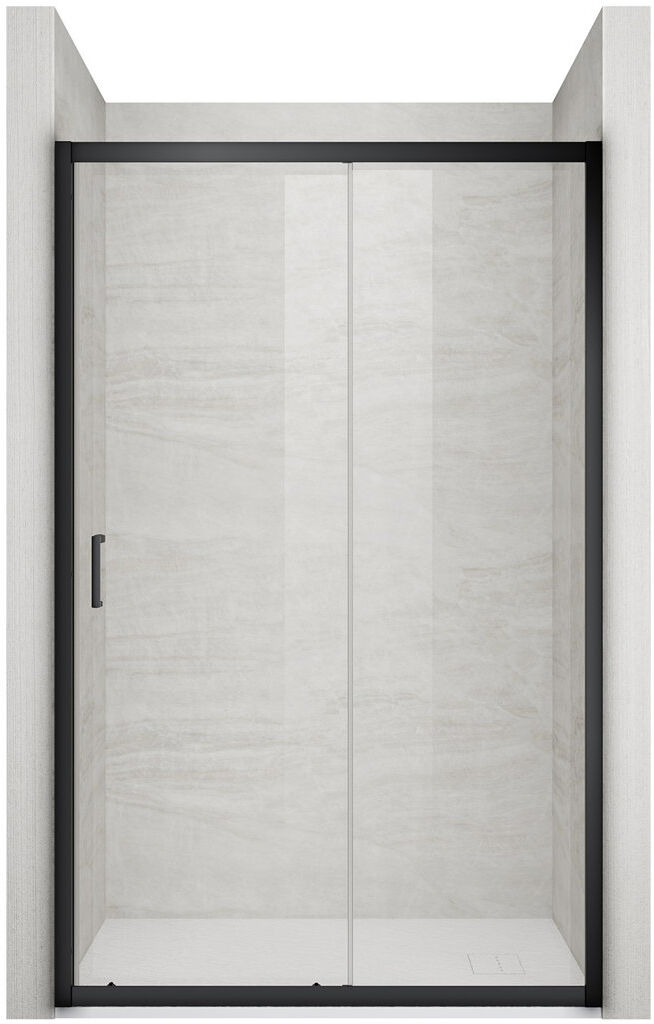
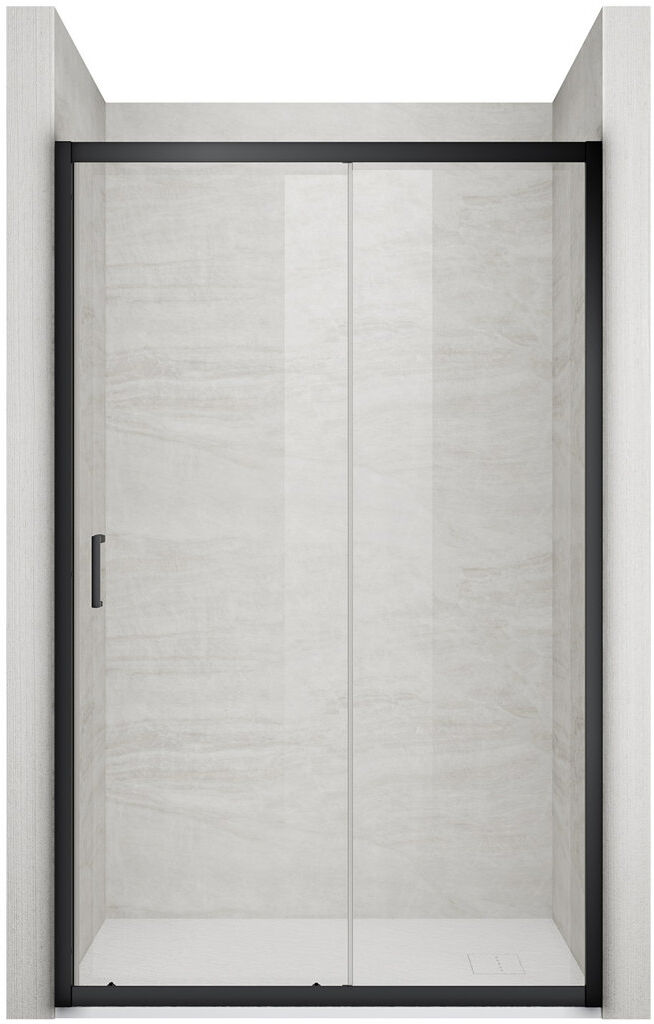
17 Stories Cost-effective single sliding door shower room, Silver Black 110"The SLC Series shower enclosures redefine modern bathroom aesthetics with their minimalist single-slide design. Crafted from a premium silver-white aluminium frame and 5mm tempered glass, this series seamlessly blends durability with sophistication. Engineered for seamless integration into contemporary spaces, the enclosure features British Standard BS EN 12150-compliant silk-screened glass and precision-tuned sliding mechanisms. Ideal for compact layouts, its adjustable design ensures a perfect fit while maintaining a sleek, uncluttered appearance. 17 Stories Size Width: 110", Finish: Black139,99 £*Shipping: 0,00 £Secure redirect to the provider
-
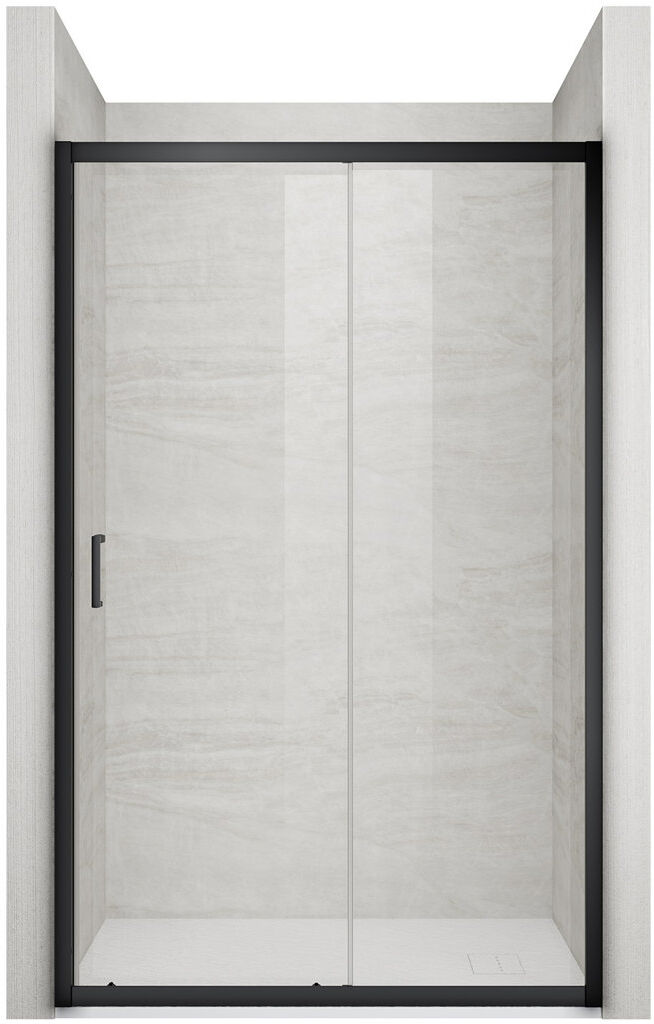
17 Stories Cost-effective single sliding door shower room, Silver Black 120"The SLC Series shower enclosures redefine modern bathroom aesthetics with their minimalist single-slide design. Crafted from a premium silver-white aluminium frame and 5mm tempered glass, this series seamlessly blends durability with sophistication. Engineered for seamless integration into contemporary spaces, the enclosure features British Standard BS EN 12150-compliant silk-screened glass and precision-tuned sliding mechanisms. Ideal for compact layouts, its adjustable design ensures a perfect fit while maintaining a sleek, uncluttered appearance. 17 Stories Size Width: 120", Finish: Black149,99 £*Shipping: 0,00 £Secure redirect to the provider
-
17 Stories Cost-effective single sliding door shower room, Silver Black 100"The SLC Series shower enclosures redefine modern bathroom aesthetics with their minimalist single-slide design. Crafted from a premium silver-white aluminium frame and 5mm tempered glass, this series seamlessly blends durability with sophistication. Engineered for seamless integration into contemporary spaces, the enclosure features British Standard BS EN 12150-compliant silk-screened glass and precision-tuned sliding mechanisms. Ideal for compact layouts, its adjustable design ensures a perfect fit while maintaining a sleek, uncluttered appearance. 17 Stories Size Width: 100", Finish: Black112,99 £*Shipping: 0,00 £Secure redirect to the provider
-
What are the rules for negating mathematical statements using quantifiers and sets?
When negating a mathematical statement with quantifiers and sets, the following rules apply: 1. To negate a statement with a universal quantifier (∀), change it to an existential quantifier (∃) and vice versa. 2. When negating a statement involving sets, use the complement of the set to negate the original statement. 3. When negating a statement involving a logical connective (such as AND, OR), apply De Morgan's laws to distribute the negation over the connectives. **
-
How do you describe and negate universal and existential quantifiers in statements?
Universal quantifiers, denoted by the symbol ∀, are used to make a statement about all elements in a set. For example, the statement "∀x, P(x)" means "For all x, P(x) is true." To negate a universal quantifier, we use the symbol ¬, so the negation of "∀x, P(x)" is "¬(∀x, P(x))," which can be rewritten as "∃x, ¬P(x)," meaning "There exists an x such that P(x) is false." Existential quantifiers, denoted by the symbol ∃, are used to make a statement about the existence of at least one element in a set. For example, the statement "∃x, P(x)" means "There exists an x such that P(x) is true." To negate an existential quantifier, we use the symbol ¬, so the negation of "∃x, P(x)" is **
-
How can I express the following statement using quantifiers or mathematical symbols?
The statement "All cats are mammals" can be expressed using quantifiers and mathematical symbols as ∀x (Cat(x) → Mammal(x)), where ∀x denotes "for all x", Cat(x) represents "x is a cat", Mammal(x) represents "x is a mammal", and the arrow → denotes "implies". This statement asserts that for every x, if x is a cat, then x is a mammal. **
-
Is the cost coverage for liposuction granted by health insurance?
In general, health insurance does not typically cover the cost of liposuction as it is considered a cosmetic procedure. However, there may be exceptions in cases where liposuction is deemed medically necessary for health reasons, such as in cases of lipedema or certain other medical conditions. It is important to check with your health insurance provider to understand their specific coverage policies for liposuction. **
When does the insurance coverage fail?
Insurance coverage can fail when the policyholder fails to pay their premiums, resulting in a lapse in coverage. Additionally, coverage may fail if the policyholder intentionally provides false information on their application, leading to the policy being voided. Insurance coverage may also fail if the policyholder engages in activities that are specifically excluded from their policy, such as driving under the influence or participating in illegal activities. Finally, coverage may fail if the policyholder fails to fulfill their obligations under the policy, such as not reporting a claim in a timely manner. **
What is pet insurance?
Pet insurance is a type of insurance policy that helps cover the cost of veterinary care for your pet. It typically reimburses you for a portion of the expenses related to accidents, illnesses, and other medical treatments for your pet. Pet insurance can provide financial assistance in case your pet requires unexpected medical attention, giving you peace of mind and ensuring your pet receives the care they need without breaking the bank. **
Top-Angebote
Products related to Quantifiers:
-
17 Stories Cost-effective single sliding door shower room, Silver Silver 110"The SLC Series shower enclosures redefine modern bathroom aesthetics with their minimalist single-slide design. Crafted from a premium silver-white aluminium frame and 5mm tempered glass, this series seamlessly blends durability with sophistication. Engineered for seamless integration into contemporary spaces, the enclosure features British Standard BS EN 12150-compliant silk-screened glass and precision-tuned sliding mechanisms. Ideal for compact layouts, its adjustable design ensures a perfect fit while maintaining a sleek, uncluttered appearance. 17 Stories Size Width: 110", Finish: Silver136,99 £*Shipping: 0,00 £Secure redirect to the provider
-
17 Stories Cost-effective single sliding door shower room, Silver Silver 100"The SLC Series shower enclosures redefine modern bathroom aesthetics with their minimalist single-slide design. Crafted from a premium silver-white aluminium frame and 5mm tempered glass, this series seamlessly blends durability with sophistication. Engineered for seamless integration into contemporary spaces, the enclosure features British Standard BS EN 12150-compliant silk-screened glass and precision-tuned sliding mechanisms. Ideal for compact layouts, its adjustable design ensures a perfect fit while maintaining a sleek, uncluttered appearance. 17 Stories Size Width: 100", Finish: Silver133,99 £*Shipping: 0,00 £Secure redirect to the provider
-
17 Stories Cost-effective single sliding door shower room, Silver Silver 120"The SLC Series shower enclosures redefine modern bathroom aesthetics with their minimalist single-slide design. Crafted from a premium silver-white aluminium frame and 5mm tempered glass, this series seamlessly blends durability with sophistication. Engineered for seamless integration into contemporary spaces, the enclosure features British Standard BS EN 12150-compliant silk-screened glass and precision-tuned sliding mechanisms. Ideal for compact layouts, its adjustable design ensures a perfect fit while maintaining a sleek, uncluttered appearance. 17 Stories Size Width: 120", Finish: Silver172,99 £*Shipping: 0,00 £Secure redirect to the provider
-
17 Stories Cost-effective single sliding door shower room, Silver Black 110"The SLC Series shower enclosures redefine modern bathroom aesthetics with their minimalist single-slide design. Crafted from a premium silver-white aluminium frame and 5mm tempered glass, this series seamlessly blends durability with sophistication. Engineered for seamless integration into contemporary spaces, the enclosure features British Standard BS EN 12150-compliant silk-screened glass and precision-tuned sliding mechanisms. Ideal for compact layouts, its adjustable design ensures a perfect fit while maintaining a sleek, uncluttered appearance. 17 Stories Size Width: 110", Finish: Black139,99 £*Shipping: 0,00 £Secure redirect to the provider
-
How do you solve compound quantifiers?
Compound quantifiers can be solved by breaking them down into simpler quantifiers and then applying the appropriate rules. For example, if the compound quantifier is "for every x, there exists a y such that...", you can first consider the "for every x" part and then the "there exists a y" part separately. This allows you to apply the rules for universal and existential quantifiers to solve the compound quantifier step by step. By breaking down the compound quantifier into simpler parts and applying the rules systematically, you can effectively solve compound quantifiers. **
-
How do universal and existential quantifiers describe and negate statements?
Universal quantifiers, denoted by the symbol ∀, are used to make a statement about all elements in a set. For example, the statement "∀x P(x)" means that the predicate P(x) is true for all elements x in the set. To negate a universally quantified statement, we use the symbol ¬ before the quantifier, so the negation of "∀x P(x)" would be "¬∀x P(x)", which is equivalent to "∃x ¬P(x)". On the other hand, existential quantifiers, denoted by the symbol ∃, are used to make a statement about at least one element in a set. For example, the statement "∃x P(x)" means that there exists at least one element x in the set for which the predicate P(x) is true. To negate an existentially quantified statement, we use the symbol ¬ before the quantifier, so the negation of "∃x **
-
What are the rules for negating mathematical statements using quantifiers and sets?
When negating a mathematical statement with quantifiers and sets, the following rules apply: 1. To negate a statement with a universal quantifier (∀), change it to an existential quantifier (∃) and vice versa. 2. When negating a statement involving sets, use the complement of the set to negate the original statement. 3. When negating a statement involving a logical connective (such as AND, OR), apply De Morgan's laws to distribute the negation over the connectives. **
-
How do you describe and negate universal and existential quantifiers in statements?
Universal quantifiers, denoted by the symbol ∀, are used to make a statement about all elements in a set. For example, the statement "∀x, P(x)" means "For all x, P(x) is true." To negate a universal quantifier, we use the symbol ¬, so the negation of "∀x, P(x)" is "¬(∀x, P(x))," which can be rewritten as "∃x, ¬P(x)," meaning "There exists an x such that P(x) is false." Existential quantifiers, denoted by the symbol ∃, are used to make a statement about the existence of at least one element in a set. For example, the statement "∃x, P(x)" means "There exists an x such that P(x) is true." To negate an existential quantifier, we use the symbol ¬, so the negation of "∃x, P(x)" is **
Similar search terms for Quantifiers
-
17 Stories Cost-effective single sliding door shower room, Silver Black 120"The SLC Series shower enclosures redefine modern bathroom aesthetics with their minimalist single-slide design. Crafted from a premium silver-white aluminium frame and 5mm tempered glass, this series seamlessly blends durability with sophistication. Engineered for seamless integration into contemporary spaces, the enclosure features British Standard BS EN 12150-compliant silk-screened glass and precision-tuned sliding mechanisms. Ideal for compact layouts, its adjustable design ensures a perfect fit while maintaining a sleek, uncluttered appearance. 17 Stories Size Width: 120", Finish: Black149,99 £*Shipping: 0,00 £Secure redirect to the provider
-
17 Stories Cost-effective single sliding door shower room, Silver Black 100"The SLC Series shower enclosures redefine modern bathroom aesthetics with their minimalist single-slide design. Crafted from a premium silver-white aluminium frame and 5mm tempered glass, this series seamlessly blends durability with sophistication. Engineered for seamless integration into contemporary spaces, the enclosure features British Standard BS EN 12150-compliant silk-screened glass and precision-tuned sliding mechanisms. Ideal for compact layouts, its adjustable design ensures a perfect fit while maintaining a sleek, uncluttered appearance. 17 Stories Size Width: 100", Finish: Black112,99 £*Shipping: 0,00 £Secure redirect to the provider
-
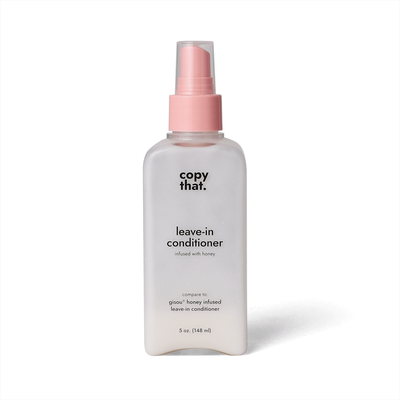
2140 Copy That Leave-In Conditioner Compare to Gisou® Honey Infused Leave-In ConditionerInfused with nourishing honey, this weightless leave-in conditioner helps soften, smooth and protect strands from everyday damage. Compare to Gisou Honey Infused Leave-in Conditioner and save.Use it on damp hair for effortless detangling and prep...20,00 $*Shipping: 0,00 $Secure redirect to the provider
-
How can I express the following statement using quantifiers or mathematical symbols?
The statement "All cats are mammals" can be expressed using quantifiers and mathematical symbols as ∀x (Cat(x) → Mammal(x)), where ∀x denotes "for all x", Cat(x) represents "x is a cat", Mammal(x) represents "x is a mammal", and the arrow → denotes "implies". This statement asserts that for every x, if x is a cat, then x is a mammal. **
-
Is the cost coverage for liposuction granted by health insurance?
In general, health insurance does not typically cover the cost of liposuction as it is considered a cosmetic procedure. However, there may be exceptions in cases where liposuction is deemed medically necessary for health reasons, such as in cases of lipedema or certain other medical conditions. It is important to check with your health insurance provider to understand their specific coverage policies for liposuction. **
-
When does the insurance coverage fail?
Insurance coverage can fail when the policyholder fails to pay their premiums, resulting in a lapse in coverage. Additionally, coverage may fail if the policyholder intentionally provides false information on their application, leading to the policy being voided. Insurance coverage may also fail if the policyholder engages in activities that are specifically excluded from their policy, such as driving under the influence or participating in illegal activities. Finally, coverage may fail if the policyholder fails to fulfill their obligations under the policy, such as not reporting a claim in a timely manner. **
-
What is pet insurance?
Pet insurance is a type of insurance policy that helps cover the cost of veterinary care for your pet. It typically reimburses you for a portion of the expenses related to accidents, illnesses, and other medical treatments for your pet. Pet insurance can provide financial assistance in case your pet requires unexpected medical attention, giving you peace of mind and ensuring your pet receives the care they need without breaking the bank. **
* All prices are inclusive of VAT and, if applicable, plus shipping costs. The offer information is based on the details provided by the respective shop and is updated through automated processes. Real-time updates do not occur, so deviations can occur in individual cases. ** Note: Parts of this content were created by AI.